SUPPLY AND DEMAND TAKE BACK
They told us the capital market creates jobs and opportunity, THEY LIED! Consumer demand is the true engine of job creation.
They DID NOT tell us that the market creates; income and wealth INEQUALITY, Job INSECURITY and precarious work, LOW WAGES and wage STAGNATION, EROSION of labour power, Consumer DEBT and financial precarity, market MONOPOLIES, UNAFFORDABILITY, HOMELESSNESS, DISCRIMINATION and EXCLUSION, PROFIT OVER PEOPLE!
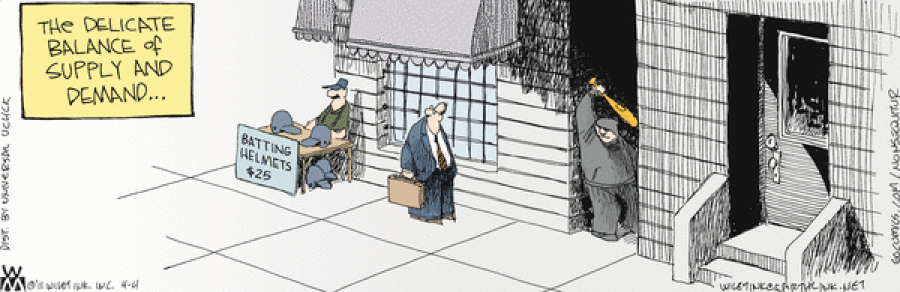
Supply and Demand is the foundation!
In macroeconomics, supply and demand is the engine of the market.
- Supply: The total amount of a specific good or service available to consumers.
- Demand: The total desire of consumers to purchase those goods at various prices.
When demand is high and supply is low, prices rise. When supply is high and demand is low, prices fall. In a "perfect" market, the price acts as a signal: it tells producers what to make more of and tells consumers what is too expensive to buy.
Consumer Sovereignty
The idea that "consumers control the economy" is known as Consumer Sovereignty. In this model, every dollar you spend is a "vote." By choosing to buy product A over product B, you are effectively telling the entire global economy: "I value this more." Theoretically, this forces corporations to be efficient and responsive to human needs.
Manufactured Demand and Surveillance
This "voting" system has been hijacked. This happens through three main mechanisms:
Neuromarketing and Artificial Needs
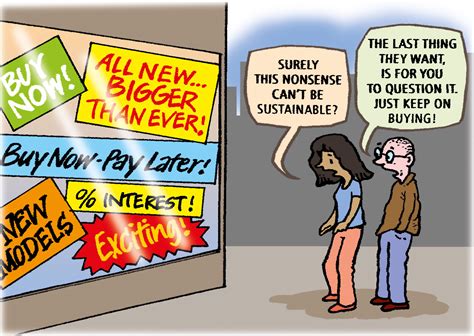
Instead of responding to existing needs, corporations use psychological conditioning to create perceived needs. Through sophisticated marketing, they target insecurities, social anxieties, and the fear of missing out. This shifts the goal from "satisfying a need" to "manufacturing a craving."
Surveillance Capitalism
This is the process where your personal data is treated as raw material. Using predatory surveillance (tracking your location, your clicks, your heart rate, and your private conversations), companies build "behavioral profiles." They no longer just predict what you might do; they use that data to "nudge" you toward specific decisions.
The Extraction Loop
When marketing and surveillance merge, the consumer is no longer a "sovereign voter." Instead, they become a predictable variable in a mathematical equation. The goal shifts from selling a product to maximizing "lifetime value":
- Identify a vulnerability through data.
- Create a desire through targeted psychological triggers.
- Optimize the sale through frictionless, high-frequency consumption.
In this cycle, the economy stops being a tool for human flourishing and becomes a system of extraction: it uses your data, your attention, and your wealth to fuel growth, often leaving the individual with less stability and more debt.
Consumerism and Greed is the problem!
We were raised to measure worth by comparison, to hoard wealth, and to take from others today to secure our own tomorrow — but those habits are individualistic and not sustainable. Respectfully, our capitalist parent's and grandparent's mindsets are outdated.
Capitalists say the free market saved us from crisis and gave everyone the opportunity for a peice of the pie — but greedy corporations turned it into predatory capitalism, eroding shared opportunity. The pie wasn’t divided; corporations rationed it.
We have the collective power to instead choose solidarity over scarcity, rebuild systems that share prosperity, and adopt bold policies and practices that secure a fair, sustainable future.
Degrowth- Degrowth is an academic and social movement aimed at the planned and democratic reduction of production and consumption as a solution to social-ecological crises.
Degrowth is critical of the concept of growth in gross domestic product as a measure of human and economic development. It argues that modern capitalism's unitary focus on growth causes widespread ecological damage and is unnecessary for the further increase of human living standards. Degrowth theorists posit that degrowth would increase human living standards and ecological preservation even as GDP growth slows or reverse. (wikipedia-Degrowth)
Circular economy (also referred to as circularity) is a model of resource production and consumption that involves sharing, leasing, reusing, repairing, refurbishing, and recycling materials and products, to extend product life cycle for as long as possible.
Planned obsolense and throwaway culture are currently the themes of consumerism today.
Planned obsolescence is a business strategy that designs products with a deliberately limited useful life or that become unfashionable quickly, forcing consumers to replace them sooner than technically necessary.
Companies use it to increases repeat purchases and revenue an speeds product turnover to maintain market growth and trends.
Common forms:
Functional (components that fail early).
Perceived (design or style changes to make products seem outdated).
Systemic (software updates that slow older devices or remove features).
Preventive (making repairs difficult or expensive).
Higher consumer costs, more waste and resource use, increased emissions, and reduced product longevity and repairability.
How to spot it / push back:
Short warranty periods, non‑replaceable batteries, proprietary fasteners, opaque repair parts pricing, frequent model updates, and forced incompatibilities.
Countermeasures: choose repairable brands, demand right-to-repair laws, buy refurbished or modular products, and support durability standards
Throwaway culture is a social and economic habit of buying cheap, short-lived goods and discarding them quickly instead of repairing or reusing them.
Causes: low-cost mass production, planned obsolescence, aggressive marketing, easy disposal systems, and cultural norms valuing newness.
Consequences: increased waste and pollution, resource depletion, higher consumer costs over time, loss of repair skills, and strain on waste-management systems.
Examples: single‑use plastics, fast fashion, disposable electronics, and frequent device upgrades.
Countermeasures: buy durable and repairable products, repair and reuse, choose second‑hand, support right‑to‑repair and durability regulations, reduce impulse purchases
The cost of convenience- Convenience-driven consumerism raises hidden costs: it boosts waste, packaging, and emissions through faster product turnover and rebound effects; increases household spending, debt, and reduced savings via subscriptions and impulse buying; undermines local businesses and concentrates corporate power; creates precarious gig work with fewer benefits; and erodes community ties and long-term resource efficiency. We need rapid policy and cultural shifts to correct this.
A Democratic Economy is the solution!
A democratic economy is the idea that the principles of democracy—participation, accountability, and equality—should be applied to the economic sphere, not just to the political one.
In our current system, most people live in a political democracy but work in an economic autocracy. You can vote for your government, but you generally have no say in how your company is run, how its profits are used, or how its decisions affect your community. A democratic economy seeks to change this.
While there is no single model, a democratic economy is usually built on three main pillars:
1. Workplace Democracy: This focuses on the "micro" level. Instead of a top-down hierarchy where owners and executives make all the decisions, workers have a seat at the table. This can look like:
- Worker Cooperatives: Businesses owned and managed by the employees themselves.
- Labor Unions: Collective bargaining to ensure workers have a voice in wages and conditions.
- Codetermination: Laws that require companies to include worker representatives on their boards of directors.
2. Social and Public Ownership-This focuses on the "macro" level. It argues that certain essential services and resources—the "commons"—should not be controlled by private corporations for profit, but by the public for the common good. This includes:
- Public Utilities: Water, electricity, and internet treated as rights rather than commodities.
- Socialized Healthcare and Housing: Ensuring that survival is not dependent on one's ability to pay.
- Community Land Trusts: Managing land to ensure permanent housing affordability.
3. Economic Equality and Agency-A democratic economy aims to prevent the extreme concentration of wealth that allows a small group of people to exert disproportionate power over the state. This is achieved through:
- Progressive Taxation: Using wealth to fund the social safety nets that provide stability for all.
- Redistribution of Power: Moving away from "Surveillance Capitalism" and towards systems where data and economic decisions are transparent and controlled by the citizens they affect.
The Core Goal-The ultimate goal of a democratic economy is to shift the purpose of economic activity. Instead of the economy being a machine designed to maximize shareholder profit through extraction, it becomes a tool designed to meet human needs and ensure the flourishing of the entire community.
Resources: .Understanding Consumerism